Engine-derived ROI benchmarks for Naples-area short-term rentals, single-family rentals, and small commercial properties. Numbers come from running real fixtures through the Cost Seg Smart engine, same engine that produces your actual study. Studies from $495.
Operated by Cost Seg Smart. Studies are IRS-aligned with internal technical review & QC included. 5 fixture benchmarks computed May 2026.
Numbers above are engine-estimated outputs from running 5 representative fixtures, not promises about what your specific property will produce. Results vary based on actual property condition, year built, renovation history, county assessor data quality, and rental treatment (STR vs LTR). Full per-fixture table, neighborhood breakdown, and downloadable CSV/PDF on the Naples cost seg benchmarks page.
Naples is the higher-end sibling of Destin and 30A within the Florida STR market, with a distinctly different buyer profile. Where Destin attracts mid-range condo buyers and 30A attracts vacation-home families, Naples skews toward high-net-worth retiree-investors and second-home buyers with longer hold-period orientation, typically 10+ year holds rather than the 5–7 year cycle common in younger-investor markets. This matters for cost-seg strategy because depreciation recapture on sale is less of a constraint when the hold period is long, allowing more aggressive Year-1 acceleration without the back-end claw-back concern.
Florida's no-state-income-tax position applies identically here as in Destin and 30A, federal §168(k) at 100% under OBBBA produces the entire tax-savings calculation cleanly. A Naples buyer in the 37% federal bracket taking $130,000 of accelerated reclassification on a $1.85M Old Naples condo captures $48,100 of Year-1 cash, no state-side reconciliation.
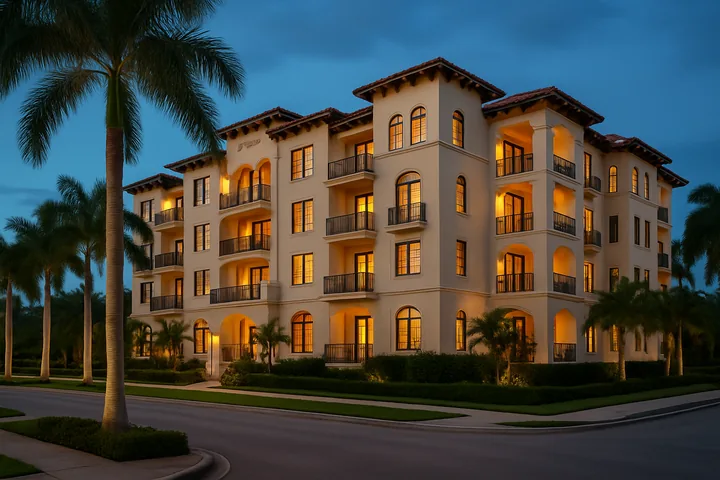
Structurally, Naples is condo-heavier than 30A (which is beach-cottage-dominant), with mid-rise gulf-front condo stock in Park Shore and Old Naples driving the bulk of the market. HOA capital assessments are a significant cost-seg consideration here, Naples high-rise condo associations have been levying substantial post-2018 capital assessments for hurricane-cycle envelope work, balcony reconstruction, and elevator/HVAC replacements. These special assessments add to depreciable basis and can sometimes be cost-seg-allocated to 5- or 15-year categories. The cost-seg study should explicitly track HOA capital additions across the ownership history.
Verify with your CPA. State tax conformity rules for federal §168(k) bonus depreciation are adjusted frequently, multiple states have modified their treatment two or more times in the past decade. The general framing on this page reflects our understanding as of May 2026, but you should always verify current-year treatment with a qualified CPA or tax attorney before relying on specific dollar projections for your situation.
These aren't rough estimates. Each fixture was run through the same engine that produces your actual study, RSMeans 2026 base costs, BLS PPI time index, county assessor land allocation, IRS Pub. 946 / Rev. Proc. 87-56 MACRS classification, 100% bonus depreciation per OBBBA.
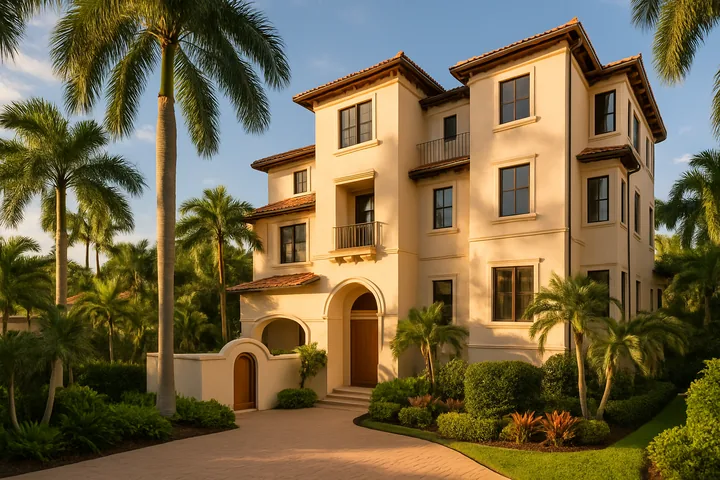
| Purchase price | $1,850,000 |
| Depreciable basis | $1,365,670 |
| Land allocation | 26.2% |
| 5-year reclassified | $281,449 |
| 15-year reclassified | $86,566 |
| Total reclass | 27.6% |
| Purchase price | $985,000 |
| Depreciable basis | $743,675 |
| Land allocation | 24.5% |
| 5-year reclassified | $145,389 |
| 15-year reclassified | $45,994 |
| Total reclass | 26.3% |
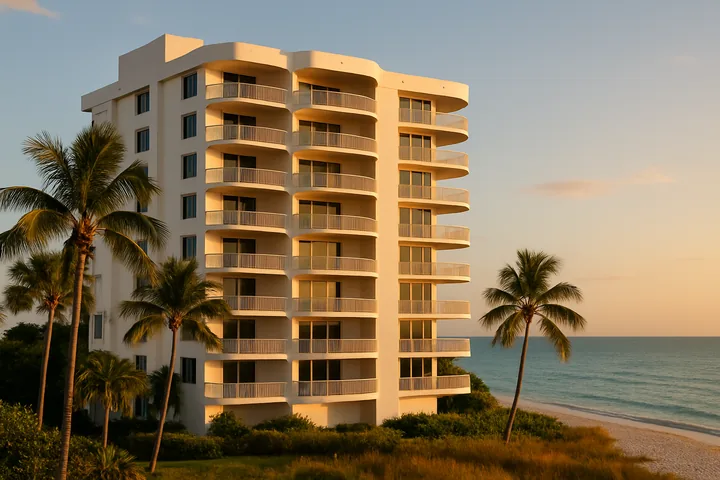
| Purchase price | $1,325,000 |
| Depreciable basis | $966,985 |
| Land allocation | 27.0% |
| 5-year reclassified | $190,060 |
| 15-year reclassified | $58,210 |
| Total reclass | 26.2% |
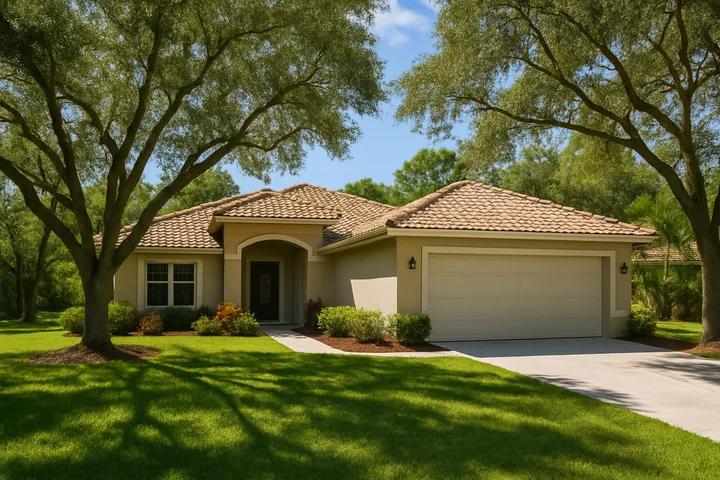
| Purchase price | $425,000 |
| Depreciable basis | $325,252 |
| Land allocation | 23.5% |
| 5-year reclassified | $32,996 |
| 15-year reclassified | $22,008 |
| Total reclass | 16.9% |
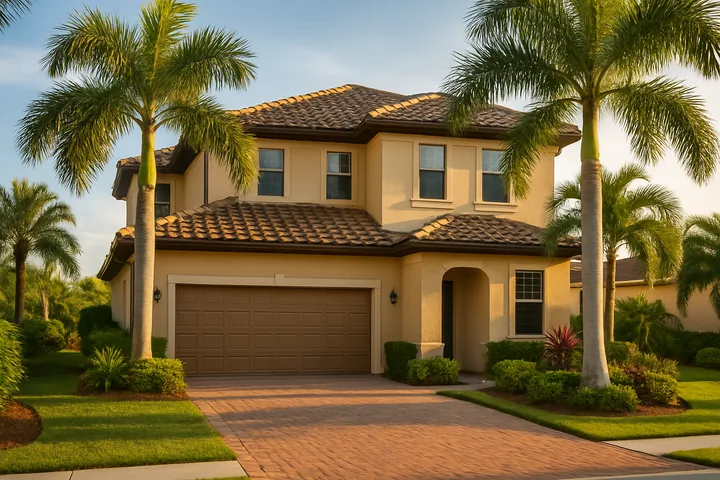
| Purchase price | $685,000 |
| Depreciable basis | $520,189 |
| Land allocation | 24.1% |
| 5-year reclassified | $106,461 |
| 15-year reclassified | $30,930 |
| Total reclass | 27.0% |
Cost-seg ROI varies more by neighborhood than by city. Naples's 5 sub-markets each have their own land-allocation pattern and property archetype:
| Neighborhood | Typical value | Typical land allocation | Profile note |
|---|---|---|---|
| Old Naples (downtown) | $1,850,000 | ~34% | Historic walkable downtown corridor near Naples Pier. High land allocation due to walkability + beach-proximity scarcity. Mix of luxury condo, historic SFR, and boutique multi-unit. |
| Pelican Bay / North Naples | $985,000 | ~28% | Master-planned beachfront community with golf, tennis, and beach club amenities. Strong HOA capital-assessment cadence. Mix of mid-rise condo and villa product. |
| Park Shore | $1,325,000 | ~30% | Mid-rise gulf-front condo dominant. Higher land allocation than North Naples due to gulf-front concentration. Active winter-rental STR market. |
| Golden Gate / East Naples (inland) | $425,000 | ~18% | Lower-cost inland SFR rental market east of Naples proper. Lowest land allocation. Strong LTR rental cash flow. Collier County jurisdiction. |
| Bonita Springs / Estero (Lee County) | $685,000 | ~22% | Lee County jurisdiction north of Collier. Mix of master-planned community SFR and condo. Mid-tier land allocation. Lighter STR regulation than City of Naples. |
Methodology note: "Typical land allocation" reflects baseline patterns for the sub-market. For ultra-premium or resort-tier inventory where reconstruction cost exceeds 2.0× the implied depreciable basis after subtracting baseline land, the engine applies a premium land floor (~50%) to keep the study within audit-defensible territory. This means individual fixture engine output may exceed the neighborhood typical, especially for resort-tier ski-in/ski-out, beachfront, or view-premium product where land scarcity dominates value. See the /data/ page for per-fixture land-source attribution. Results vary substantially by specific property condition, renovation history, and assessor records.
City of Naples maintains a moderately restrictive short-term rental regulatory environment within city limits, with minimum stay requirements and registration obligations for STR operations. Collier County unincorporated areas (East Naples, parts of North Naples) operate lighter regulatory regimes. Lee County (Bonita Springs, Estero) has its own permit regime distinct from Collier. STR-intent buyers should verify the property's jurisdiction. Hurricane exposure is the practical hold-period risk, post-2022 Florida property insurance availability and cost has been challenging in Collier and Lee counties, and capital-assessment activity for envelope work and balcony reconstruction has been substantial. Material participation under §469 is achievable for self-managing owners but harder for buyers using full-service management, document hours contemporaneously. The retiree-investor concentration in Naples often means owners directly manage their own STR operations, which supports cleaner §469 active-participation positions.
For the full IRS-rule reference layer (§168(k), §469 material participation, state conformity), see irsdepreciationrules.com, our open reference site.
Yes, significantly. Bonus depreciation recapture on sale claws back the accelerated portion of the deduction if you sell before exhausting the standard MACRS schedule. For Naples buyers planning 10+ year holds, the recapture concern is materially less than for 5-year-hold investors in markets like Joshua Tree or Tahoe. This supports more aggressive Year-1 acceleration without the back-end claw-back. Combined with Florida's no-state-tax position, the after-tax math is the cleanest possible: full federal Year-1 acceleration at 100% bonus, no state-side reconciliation, and minimal recapture risk over the typical Naples hold horizon. The §1031 exchange option also remains available for long-hold Naples investors who eventually want to roll proceeds into the next property.
Recurring HOA dues are ongoing operating expenses, deductible against rental income but not added to basis. Special capital assessments, for envelope work, balcony reconstruction, elevator replacement, pool deck rebuilds, hurricane-hardening retrofits, are capitalized as additions to your depreciable basis. The post-2018 and post-2022 Naples high-rise condo special-assessment cycle has been substantial; many Pelican Bay, Park Shore, and Old Naples condo owners have paid $20K–$80K in special assessments over the past decade. A cost-seg study should explicitly include all special assessments paid since acquisition as basis additions, and can sometimes identify short-life components (decking, lighting, balcony rail systems, FF&E in shared amenity spaces) within HOA-funded improvements for reclassification into 5- or 15-year categories. Track all special assessments separately from regular dues.
Same Florida no-state-tax position, same engine treatment of STR FF&E uplift, similar absolute basis dollars at the upper end. The structural differences: 30A is single-family beach-cottage-dominant with 30–38% land allocation in core New Urbanist communities; Naples is mid-rise condo-dominant with 28–34% land allocation in Park Shore and Old Naples. Hold-period profile differs significantly, 30A buyers typically hold 5–10 years; Naples buyers hold 10–20+ years. HOA capital assessment cadence is more material in Naples (mid-rise condo with hurricane-cycle envelope work) than on 30A's stand-alone beach cottages. For longer-hold high-net-worth buyers, Naples produces cleaner after-tax math; for shorter-hold vacation-cottage buyers, 30A's architectural premium and family-vacation demand profile is the better fit.
It affects the operating-economics overlay more than the cost-seg study itself. Engine MACRS classification is the same regardless of hurricane risk. But post-2022 property insurance availability and cost in Collier and Lee counties has become challenging, insurance premiums have risen dramatically, and in some condo associations insurance is hard to obtain. The HOA special-assessment cadence for envelope work and balcony reconstruction has been substantial. Both factors compound against the cost-seg Year-1 tax benefit by reducing operating margin over the multi-year hold. Build conservative hold-period assumptions into your underwriting, model insurance and capital-assessment costs explicitly, and treat the cost-seg deduction as one component of the broader Naples investment return rather than the entire return.
Because the engine balances two factors: high land allocation (suppresses reclassification ratio percentage) is offset by high FF&E density typical of furnished gulf-front condo product (lifts the 5-year personal property pool). A $1.325M Park Shore gulf-front condo with 32% land allocation has $900K of depreciable basis; with the typical 20–24% reclass ratio for furnished mid-rise condo product, that's $180K–$215K of accelerated reclass. The engine treatment of FF&E density (smart-home tech, full-kitchen packages, dedicated electronics, decorative finishes) compensates partially for the high land allocation. Park Shore properties land in the 20–24% reclass range, middle of the network spread, not bottom.
More general cost-seg questions answered at costsegsmart.com/faq/.
Cost Seg Smart studies are IRS-aligned, engineering-reviewed, and include written audit defense. Pricing is transparent and starts at $495 for residential properties under $300K, full pricing on the main site.